
We are your date with Earth. Creating climate awareness for a sustainable planet
The COP30, seen sixty days later
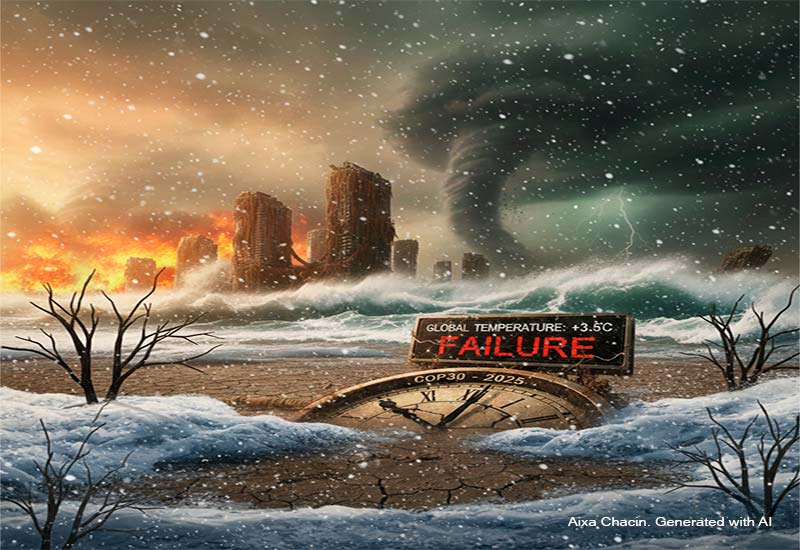
As we write this, two months have passed since the close of COP30, held in Belém, Brazil, between November 10 and 21, 2025, a meeting that had generated much hope, but whose final outcome fell far short of expectations…
From the results of COP30, without needing to resort to complex meteorological operations or temperature charts, we can predict a further increase in global temperature in 2026. Leer +
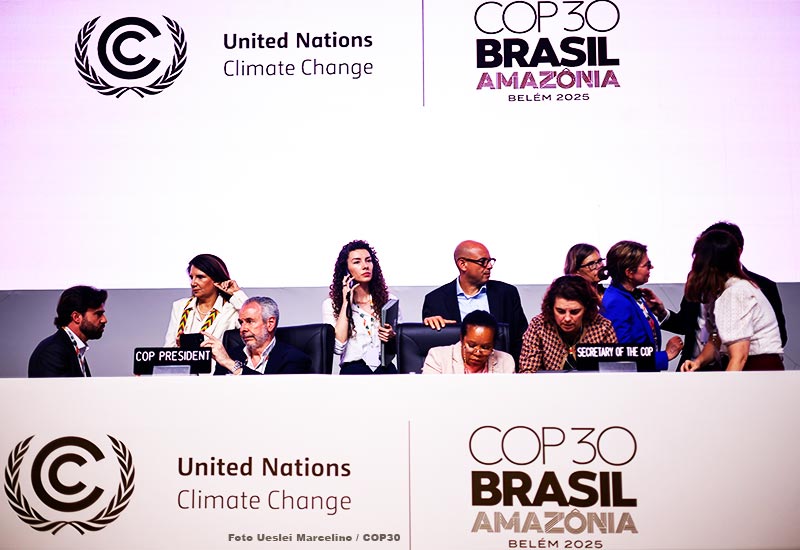
COP30: Conference of the Parties or Conference of the Deniers?
Fifteen days of negotiations during COP30 culminated in an agreement to renew climate commitments in the face of rising temperatures. However, any mention of fossil fuels, the main cause of global warming, was omitted, which, in turn, effectively nullifies the roadmap for oil, gas, and coal—one of the central motivations of COP30. Leer +
The most important COP Climate Conference
turns thirty

Thirty is a significant number… thirty years in climate matters is a long time.
Let’s hope that COP30 serves to change course, and is not just another tournament of words, slogans, and broken promises, but rather the forum envisioned 30 years ago, created to address the dangers of climate change and global warming, which threaten life on Earth.
Climate conferences have failed to stop global warming. The temperature curve talks for itself.

Infographic: Temperature evolution between 1972 and 2025. Analysis and Production: Sandor A. Gerendas-Kiss/Aíxa Chacín
See original source and credits in our Climate Criticism section
Have climate agreements worked?
Two new sections in SGK-PLANET clarify the answer.

New illustrated section of SGK-PLANET
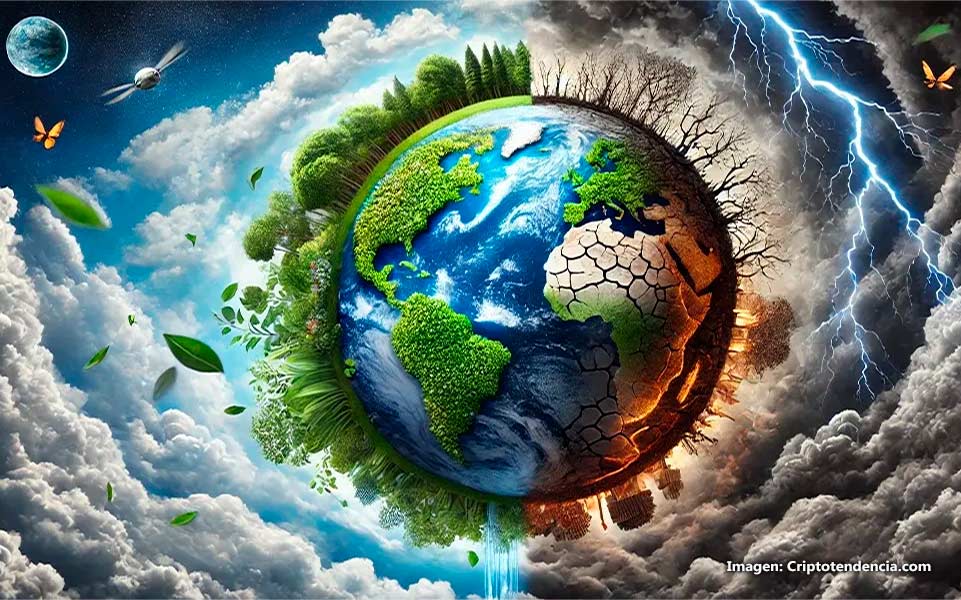

New illustrated section of SGK-PLANET
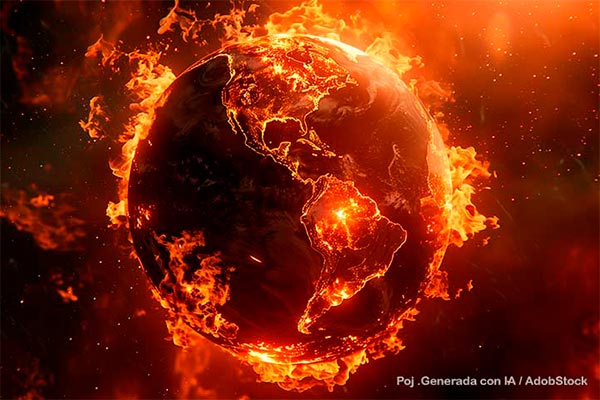

The Deforestation Clock ©
SGK-PLANET’s original contribution
to the fight against climate change
A model to identify, relate and visualize the causes and multiple consequences of tree felling
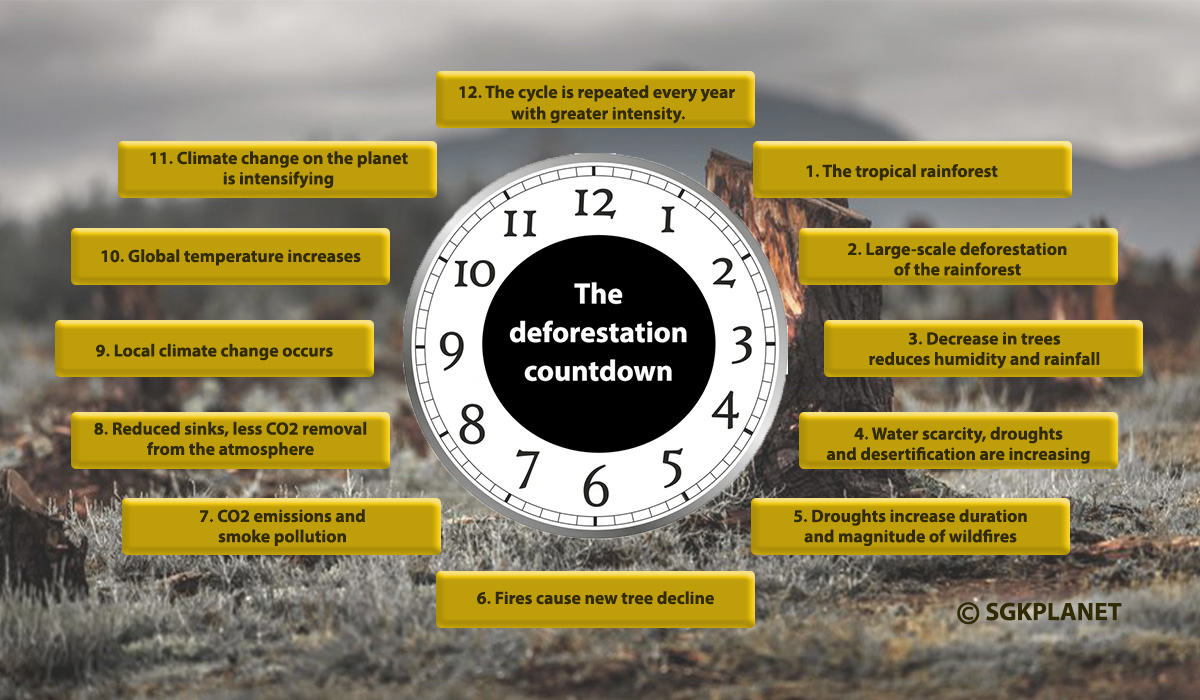
The goal of the Deforestation Clock is to describe what happens inside and outside the rainforest, and to understand that it’s a chain reaction, where the absence or excess of any link affects the entire system. Deforestation occurs year after year, and its consequences accumulate over time.
The Deforestation Clock isn’t a clock that tells the time, nor do its 12 digits represent the 12 months of the year. We chose it for practical and visual reasons, to explain the sequence of events involved in the massive deforestation of forests and jungles, and its consequences.
Recommended readings
Death decree for the trees of the Amazon
By Sandor Alejandro Gerendas-Kiss

In the early hours of Thursday, July 10, 2025, the Brazilian Chamber of Deputies approved a controversial bill that relaxes environmental licensing regulations—a veritable environmental lynching—amidst harsh criticism from environmental organizations.
Before continuing, we would like to note the following text by Carlos Nobre and Thomas Lovejoy, two exceptional authorities on the AMAZON RAINFOREST, written seven years ago. (Science Advances 2018).
“The intensive, uncontrolled, and illegal advance of deforestation in the Amazon is pushing the Amazonian ecosystem to a point of no return where the rainforest would lose its capacity to function”, as stated in their work, “Amazon Tipping Point.”
Carlos Nobre is a Brazilian scientist, and Thomas Lovejoy, now deceased, was an American scientist and former president of the Amazon Biodiversity Center. We owe the concept of biological diversity to Lovejoy.
According to both, the Amazon Tipping Point means that the rainforest would cease to function as a carbon sink and would become a net emitter of CO2 into the atmosphere, with severe consequences for global warming and climate change. This could transform the rainforest from a tropical rainforest into a dry, degraded tropical plain, a point at which the Earth’s temperature would rise to unpredictable levels.
Fifteen days after the controversial bill was passed, we read a news article in DW, dated July 25, 2025, titled: “Environmental protection in Latin America, in freefall,” written by Sandra Weiss, a political scientist and former diplomat. As a freelance journalist, Sandra writes articles about Latin America for several German newspapers.
Her article is subtitled: “Many Latin American countries are rapidly dismantling their environmental legislation. The promise of development based on extractivism is an illusion, experts warn.”
Continue reading…

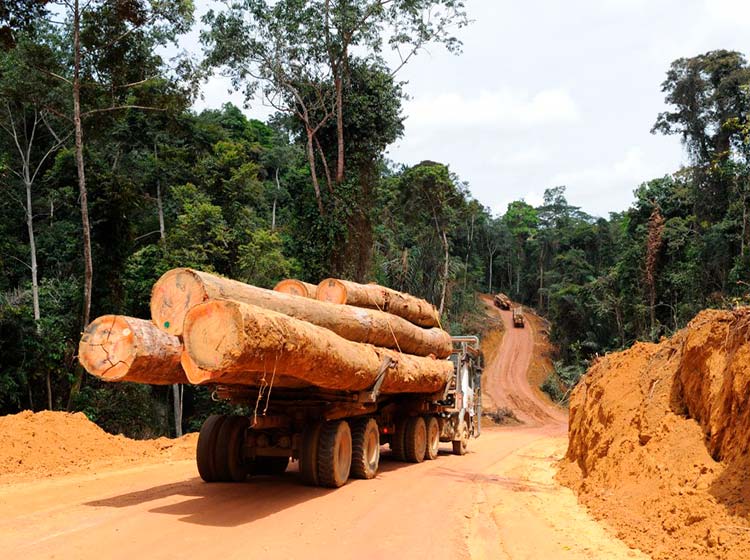
Do you know what an Amazon tipping point is?
“The intensive, uncontrolled, and illegal advance of deforestation in the Amazon is pushing the Amazonian ecosystem to a point of no return where the rainforest would lose its ability to function”, as stated in their work, *Amazon Tipping Point*.
Carlos Nobre is a Brazilian scientist, and the late Thomas Lovejoy was an American scientist and former president of the Amazon Biodiversity Center. Lovejoy is credited with coining the very concept of biological diversity. According to both authors, the Amazon Tipping Point means that the rainforest would cease to function as a carbon sink and would become a net emitter of CO2 into the atmosphere, with severe consequences for global warming and climate change. This could transform the rainforest from a tropical rainforest into a dry, degraded tropical plain, a point at which the Earth’s temperature would rise to unpredictable levels.
Even they were more advanced than many are today.
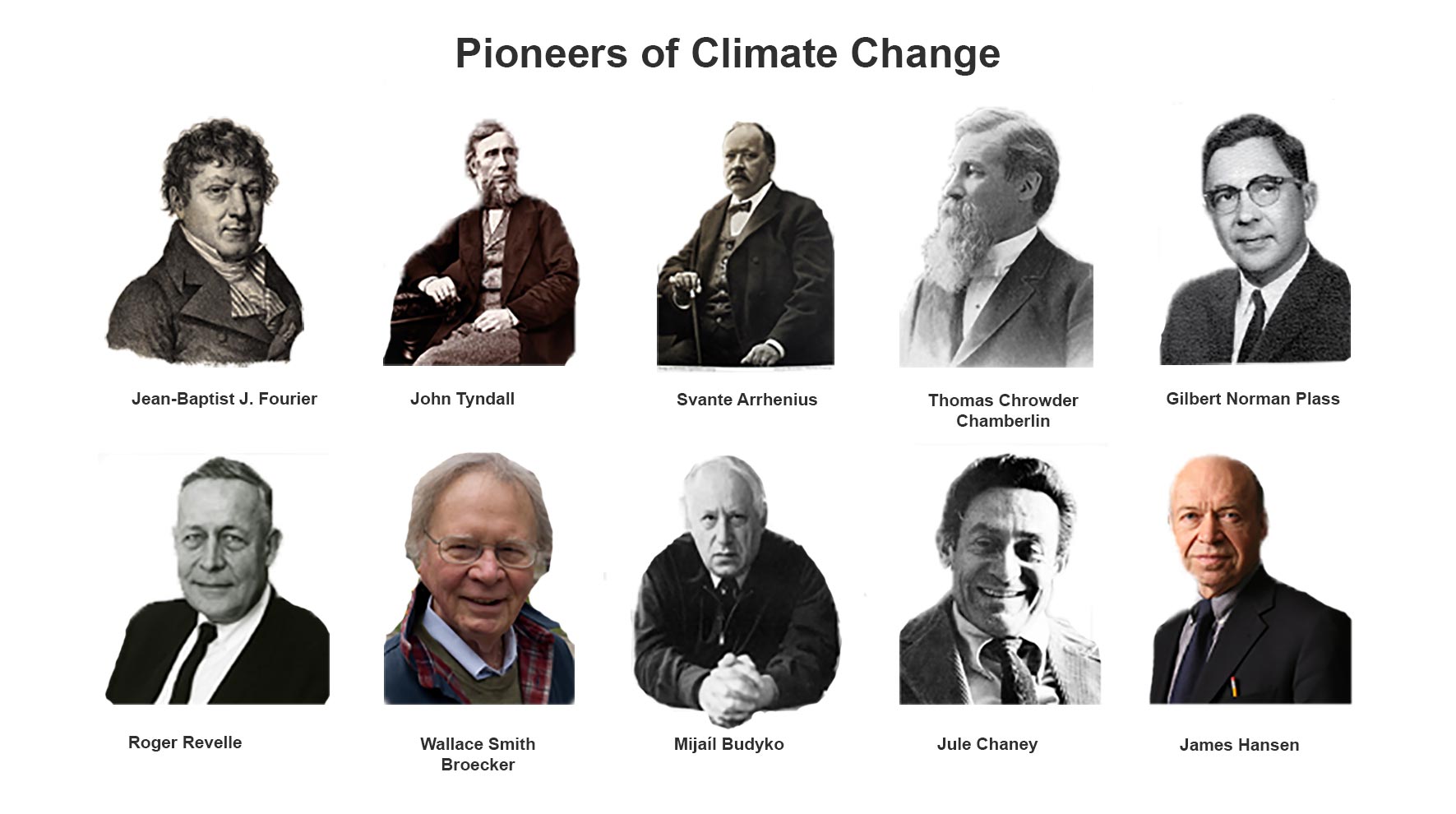
Who discovered the greenhouse effect and how?
J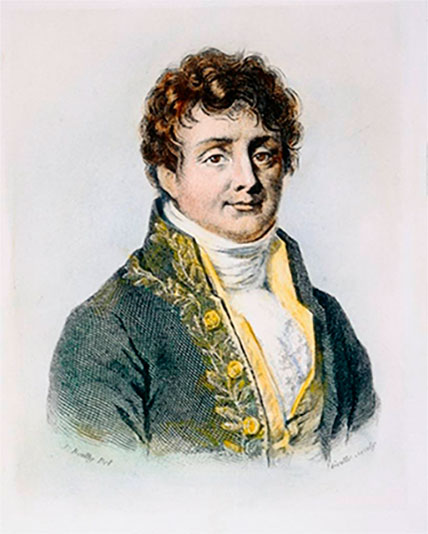 ean-Baptiste Joseph Fourier (1768-1830), French mathematician and physicist, who in 1824 calculated that an object the size of Earth and at a similar distance from the sun should be much colder than our planet actually is. He asserted that Earth maintains a temperate climate because the atmosphere retains heat as if it were under glass. Thus, Fourier has the honor of being the first to use the greenhouse analogy.