
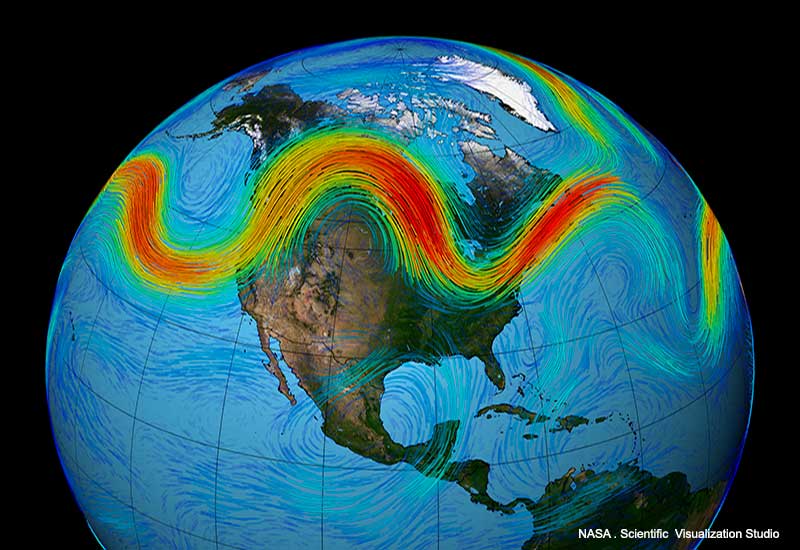
The polar vortex is a phenomenon that normally occurs in the upper atmosphere above the Arctic. It manifests as a mass of cold air that rotates counterclockwise, growing and shrinking with the changing seasons.
The phenomenon was diagnosed as a “sudden stratospheric warming”, which caused the vortex to disperse and reverse its circulation, lowering temperatures during warm months like March and part of April in North and Central America, as well as in parts of South America.
In early 2025, the polar vortex moved away from the pole and collapsed due to unexpected warming. It’s a bit like opening the lid of a jar containing extremely cold air, allowing it to escape and disperse, lowering the surrounding temperature.
Can global warming cause cold?
Scientific studies support the claim that polar vortex disruptions are occurring more frequently than they did until recently. Therefore, the warming of the Arctic is increasing the energy of atmospheric waves, making the polar vortex disruption more likely. This causes cold air to move further south, generating unusually cold temperatures in areas such as the United States and Canada.
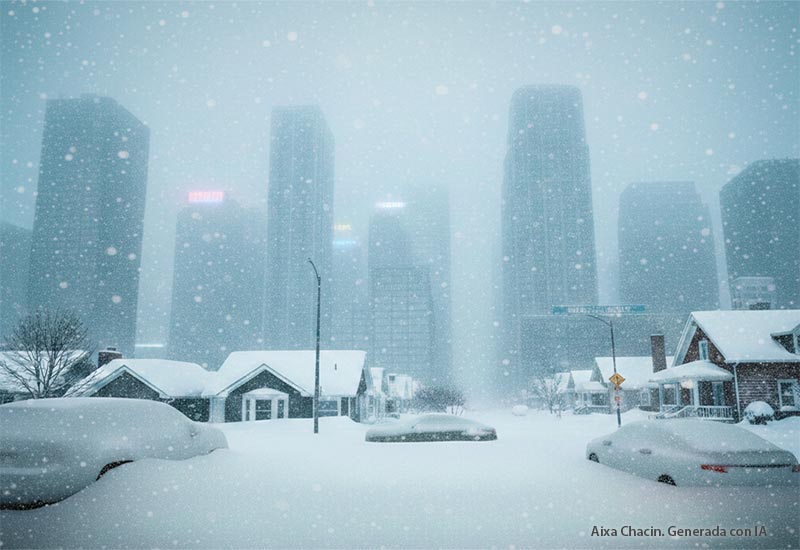
One such disruption occurred in March 2025, triggering a “return of winter” in April, with extreme sub-zero temperatures and intense, icy snowfall in the northeastern United States and southeastern Canada.
Temperature drops even reached northern South America, with unusual cold weather that lasted almost until Easter in mid-April.
It is not difficult to associate this phenomenon with the average temperature of 2024, which is the highest on record.
Sandor A. Gerendas-Kiss
SGK-PLANET Editor




Leave A Comment