
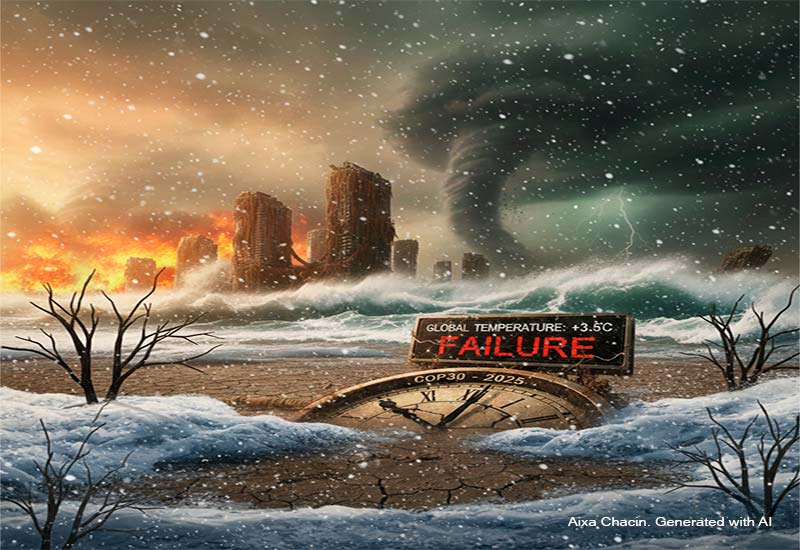
As we write this, two months have passed since the close of COP30, held in Belém, Brazil, between November 10 and 21, 2025, a meeting that had generated much hope, but whose final outcome fell far short of expectations.
When a COP ends, usually set on a Friday, all environmentalists rush to draft their summaries and conclusions for publication the following Saturday or Sunday. In them, we voice our criticisms, express our concerns, and record our recommendations. But the following year, the environmental situation almost always remains the same or worse.
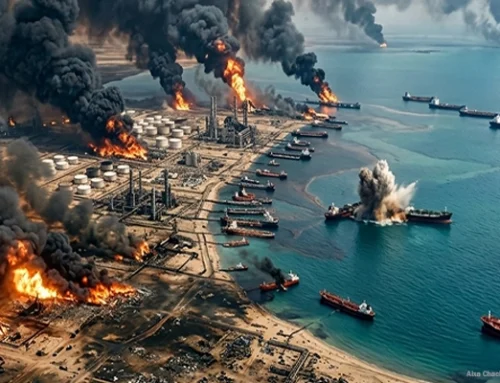
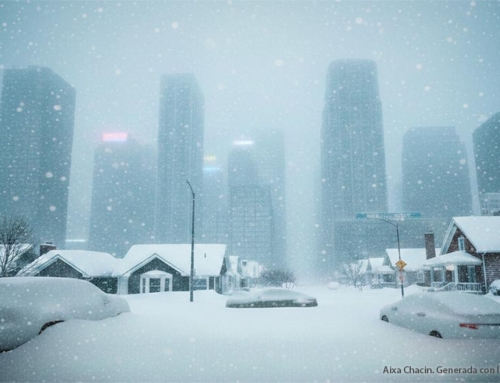
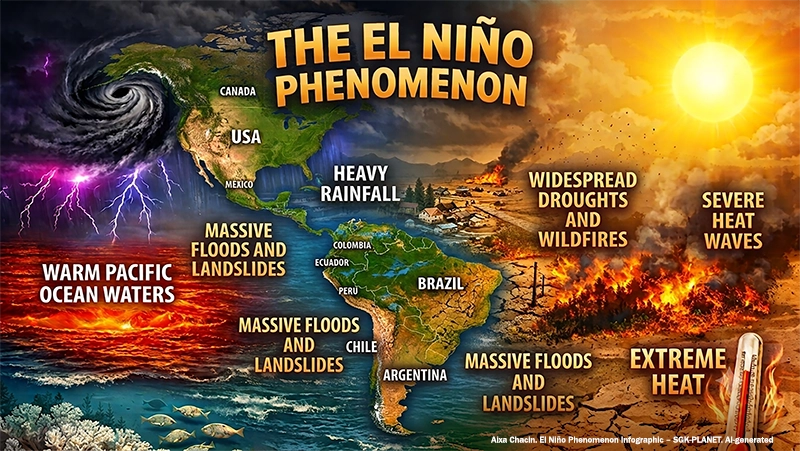
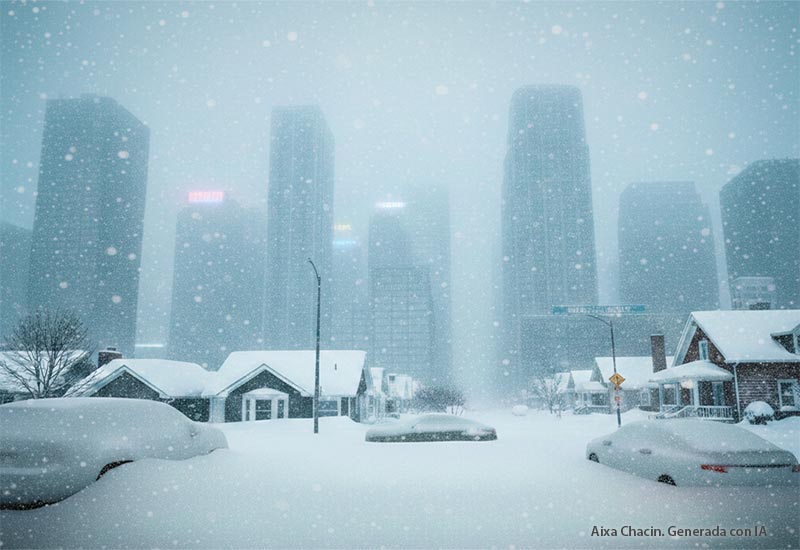
From the results of COP30, without needing to resort to complex meteorological operations or temperature charts, we can predict a further increase in global temperature in 2026. Consequently, we can also foresee the natural disasters that would occur this year, which have already begun to manifest themselves this January. Thus, we have seen mega snowfalls in unusual places, torrential rains, devastating forest fires, and even unusual storm surges in the Mediterranean, and this in just twenty days of the year.
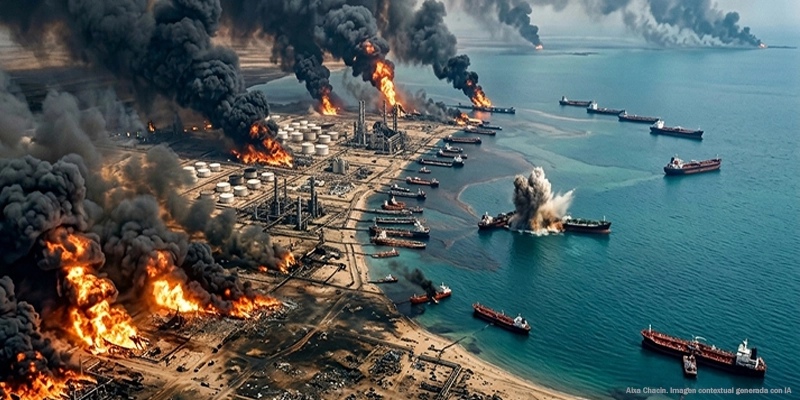
If we add to this the recent news about new plans for the extraction and commercialization of fossil fuels by 2026, it is not difficult to predict that new natural disasters will strike our beloved blue planet and the inhabitants who live on it.
Even worse: the oil companies present at COP30, at the last minute, managed to impose their will and prevent fossil fuels from even being mentioned in the final document, something unprecedented for the main annual global climate meeting.
The information presented here predicts an even darker climate outlook for 2026.
In a few months, the UN will begin publishing data on COP31. The venue, date, president, slogan, and other details will be announced, eagerly anticipated by some as if it were a World Cup, all the while knowing that the poor results of COP30 will gradually fade into obscurity and eventually remain only in memory, as if behind frosted glass.
Sometime later, they will be completely forgotten, and hardly anyone will mention them anymore. And so, without realizing it, we have seen COP1, COP21, COP22, COP23, COP24, COP25, COP26, COP27, COP28, COP29 and COP30 pass before our eyes, a slow caravan of annual climate conferences, a tedious succession that has failed to fulfill the spirit in which they were created in 1995, nor the fundamental mandate of the Paris Agreement (COP21, 2015), to keep the temperature at +1.5°C, from its pre-industrial value of 1750.
In the early hours of Thursday, July 10, 2025, exactly four months before the start of COP30, the Brazilian Chamber of Deputies, Brazil being the host country of COP30, approved a controversial bill that relaxes environmental licensing regulations, amidst harsh criticism from environmental organizations. We wrote about this in the article Decree of Death to the Trees of the Amazon.
Going back a bit in time, twenty years before the first COP, the first Earth Summit was held in Stockholm in 1972, an initiative of Sweden, and has been compared to the Universal Declaration of Human Rights. The document consists of seven proclamations and 26 principles, addressing “the need for common criteria and principles to inspire and guide the peoples of the world in preserving and improving the human environment”. The Stockholm Declaration contained everything we should have been doing for our planet, but which we failed to do.
The Second Earth Summit, held in Rio de Janeiro, Brazil, in 1992, was a very important meeting, taking place twenty years after Stockholm and far more pragmatic than its predecessor. Rio92 was the birthplace of climate conferences, conventions, and declarations, such as:
- The United Nations Framework Convention on Climate Change (UNFCCC). 2. The need to stabilize greenhouse gas concentrations in the atmosphere. 3. The creation of the COP (Conference of the Parties) as the supreme body of the UNFCCC. 4. The Declaration of Principles on Forests. 5. The Convention to Combat Desertification. 6. The Convention on Biological Diversity. 7. Agenda 21, or the global action plan to promote development.
Everything was in place to cross the threshold into the 21st century with justified optimism. However, almost none of these conventions were legally binding; that is, no legal framework was created to compel countries or parties to comply with them. This is largely why, after almost thirty years, most of the goals have not been met, especially those related to stabilizing global temperature.
The latest setback has been, precisely, the disastrous handling of COP30, as we have seen.
This is worrying, especially for young people, because they are the ones who will have to pay the climate bill in the not-so-distant future.
Sandor Alejandro Gerendas-Kiss
SGK-PLANET Editor

Leave A Comment